
Pests
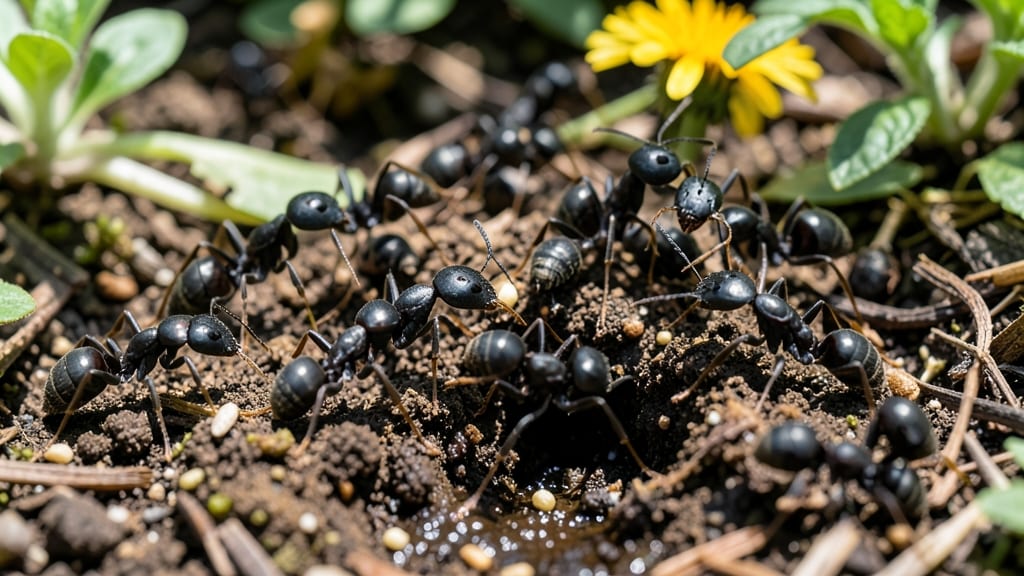
In a garden, ants play multiple roles: they improve soil quality through aeration, spread seeds to help plants grow, and act as natural pest controllers by eating harmful insects. However, they can also harm plants by collecting sap or building nests in roots, requiring careful management.
Ants act like tiny garden engineers, constantly tunneling underground which breaks up compacted soil and lets air and water penetrate deeper. 🔥 This process mimics what a gardener would do with a fork, but on a microscopic scale.
Their seed dispersal habits are equally impressive—they carry seeds away from parent plants, often dropping them in nutrient-rich spots where they germinate. What's fascinating is how they create these underground networks that double as highways for nutrients, connecting plants in ways we rarely notice.
When ants focus on pest control, they become your garden's unsung heroes. They target soft-bodied insects like aphids and caterpillars, reducing the need for chemical pesticides. The catch? Some species develop relationships with sap-sucking insects like mealybugs, protecting them in exchange for sugary secretions.
This is why you might see ants "tending" to these pests—they're not helping your plants, they're farming them. The key to managing this balance lies in understanding which ant species are in your garden and how they interact with your specific plants.
💡 In This Article
- How Ants Benefit Garden Soil and Plant Growth
- Natural Ways to Encourage or Discourage Ants in Your Garden
How ants benefit garden soil and plant growth
Ants function as nature's soil tillers, creating intricate tunnel systems that improve drainage and oxygen flow to plant roots. A single colony can excavate up to 50 feet of tunnels per year, breaking up compacted soil that often forms after heavy rain or foot traffic.
These underground pathways also enhance microbial activity—ants distribute fungal spores and bacterial colonies throughout the soil, creating a more fertile environment. The result? Plants develop stronger root systems that can access water and nutrients more efficiently, much like how aerated garden beds help vegetables thrive.
Their seed dispersal methods are equally sophisticated. Worker ants carry seeds away from parent plants, often dropping them in nutrient-rich spots where they germinate. Studies show that ants can disperse seeds up to 30 feet from their original location, which helps prevent overcrowding and promotes plant diversity.
Some species even cultivate fungi in their nests, creating underground "gardens" that release nutrients into the soil when the ants abandon them. This fungal farming behavior boosts soil fertility in ways that mimic composting, but on a microscopic scale. 💫
Ants also serve as natural pest controllers by preying on harmful insects like aphids, caterpillars, and whiteflies. A single colony can consume thousands of these pests annually, reducing the need for chemical pesticides.
However, not all ant-plant interactions are beneficial—some species protect sap-sucking insects like mealybugs in exchange for their sugary secretions. This mutualism can actually harm your plants by encouraging pest populations.
The key difference lies in the ant species: carpenter ants and fire ants are generally more destructive, while pavement ants and harvester ants often provide more benefits.
One often-overlooked benefit is how ants improve water retention. Their tunnels create capillary action in the soil, helping water penetrate deeper rather than running off the surface. In drought-prone areas, this can mean the difference between thriving plants and struggling ones.
The trade-off? Their tunnels can also create pathways for weeds to establish themselves more easily. To balance these effects, gardeners can encourage beneficial ant species by planting native flowers that attract them, while discouraging destructive species through targeted organic methods.
Consider this comparison: A garden with active ant colonies typically has 20-30% more microbial diversity in the soil than one without, thanks to their tunneling and nutrient distribution. This diversity supports healthier plants that resist diseases better.
The challenge is identifying which ants are helping versus hindering—observing their behavior (like whether they're carrying seeds or protecting pests) provides crucial clues. For example, harvester ants that collect seeds are generally beneficial, while Argentine ants that tend to aphids are more problematic. 🌱