
Tools
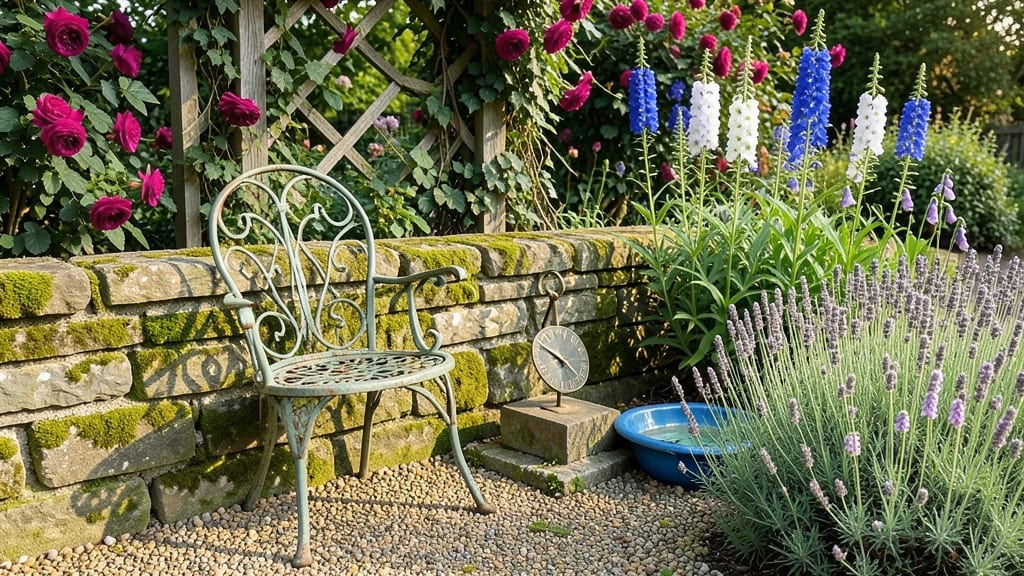
An English garden is a romantic, naturalistic landscape featuring wildflowers, winding pathways, and organic plant arrangements inspired by 18th-century English estates designed by landscape architects like Capability Brown and Humphry Repton. It emphasizes soft, irregular shapes and layered plantings over geometric precision.
This garden style emerged as a reaction against the rigid, formal gardens of the Renaissance, embracing instead the organic beauty of the English countryside. 🌿 What sets it apart is its emphasis on creating a sense of "wild" elegance—think rambling roses, mixed perennials, and carefully placed topiary that feels untamed yet deliberate.
The design often incorporates water features like ponds or streams to enhance the natural ambiance, while seasonal planting ensures year-round interest.
Unlike French formal gardens with their strict symmetry, English gardens prioritize asymmetry and texture—layering shrubs, grasses, and flowering plants to create depth. The result is a space that feels both inviting and timeless, perfect for those who love nature's charm over structured perfection.
💡 In This Article
- Historical Roots of English Garden Design
- Key Elements to Create an Authentic English Garden
Historical roots of English garden design
English garden design traces its origins to the 17th century, when formal Renaissance gardens—with their rigid geometric patterns and clipped hedges—dominated European landscapes. The shift began in the mid-18th century as landscape architects like Lancelot "Capability" Brown (1716-1783) rejected these structured designs in favor of naturalistic layouts.
Brown's philosophy centered on "improving" land by blending it seamlessly with the surrounding countryside, creating expansive lawns, serene lakes, and undulating hills that mimicked nature's own contours.
This evolution was deeply tied to the Picturesque movement, which celebrated irregularity and natural beauty over symmetry. Brown's work at places like Stowe House and Blenheim Palace showcased his signature techniques: meandering paths that invited exploration, framed vistas to highlight scenic views, and water features that added tranquility.
His designs often incorporated existing agricultural elements, like farm buildings or orchards, to maintain a sense of authenticity. 🌿 The term "capability" came from Brown's habit of telling landowners their estates had "capabilities" beyond their current state, emphasizing potential over perfection.
The late 18th century saw further refinement under Humphry Repton (1752-1818), who built on Brown's ideas with a focus on layered planting and seasonal interest. Repton's "Red Books"—hand-painted proposals for garden transformations—revealed his meticulous approach to balancing structure and spontaneity.
He introduced the concept of "borrowed scenery," where garden designs would frame distant views, creating the illusion of endless space. This technique, along with his use of cottage-style borders filled with wildflowers and perennials, laid the foundation for the romantic English garden we recognize today.
What makes these gardens uniquely English is their practicality. Unlike the purely decorative French gardens, English designs often incorporated functional elements like kitchen gardens, orchards, and even grazing land for livestock. This duality—beauty and utility—reflects the agricultural heart of England's rural landscape.
The Industrial Revolution further shaped garden design, as urban dwellers sought to recreate the countryside's charm in their own spaces, leading to the rise of suburban English gardens in the 19th century.
One of the most enduring legacies of this era is the romantic ideal of untamed elegance. Brown and Repton's work rejected the idea that nature needed to be tamed; instead, they showed how to enhance its natural beauty.
This philosophy continues to influence garden design today, from wildflower meadows to naturalistic ponds, all while maintaining a sense of harmony with the environment. The result is a style that feels both timeless and deeply rooted in history. ✨