
Companion Plants
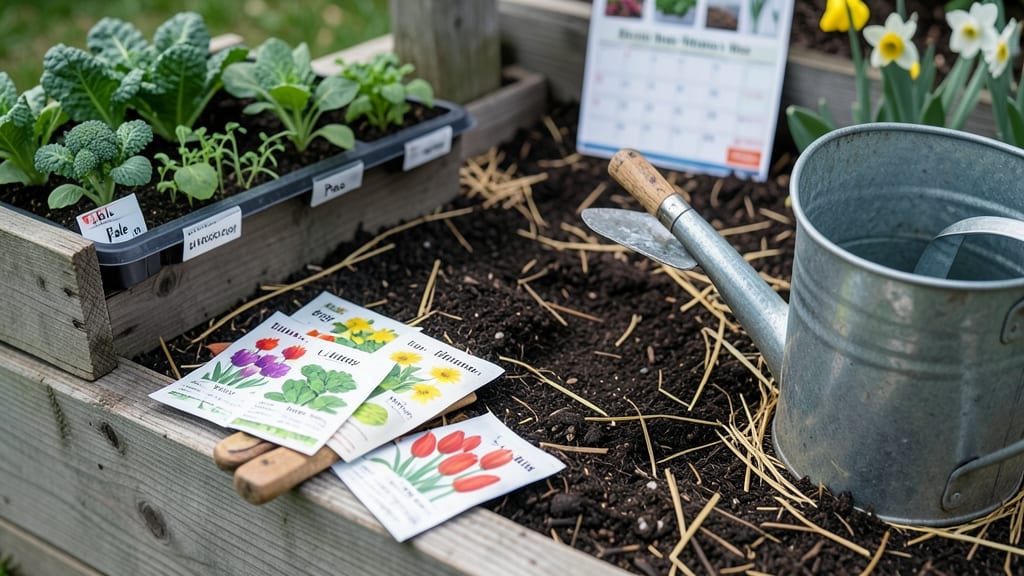
To plant a garden in East Tennessee, time your crops carefully: cool-season vegetables like spinach and peas go in early March before the last frost (mid-April), warm-season crops like tomatoes and peppers wait until after mid-April, and late-season plants like beans start in June. Always verify frost dates and soil temperatures for your specific location.
East Tennessee's USDA Zones 6-7 give you about 180 frost-free days, but exact timing varies with elevation and microclimates. 🌱 The mid-April average last frost date isn't set in stone—some years it arrives earlier, others later.
That's why I always check the National Weather Service or local agricultural extension reports before planting. For example, high-elevation areas like the Smokies may have frost lingering into May, while valleys warm up faster. This variability means your neighbor's perfect planting schedule might not work for your backyard.
Beyond frost dates, soil temperature matters just as much. Warm-season crops like peppers need soil at at least 60°F before planting, while cool-season crops thrive in 40-50°F soil.
I use a soil thermometer to confirm readiness—this simple tool has saved me from planting too early and watching seedlings wither. Succession planting is another key strategy: after harvesting early peas in May, I replant with beans or cucumbers to maximize my growing season.
💡 In This Article
- East Tennessee Frost Dates and Hardiness Zones
- Soil Preparation and Crop-Specific Planting Timelines
East Tennessee frost dates and Hardiness Zones
East Tennessee's climate falls primarily within USDA Hardiness Zones 6-7, where the average last spring frost typically arrives around mid-April.
This date marks the transition point for cool-season crops like lettuce and spinach, which can handle light frosts, to warm-season plants such as tomatoes and peppers that need consistent warmth. The first fall frost usually hits around mid-October, giving you roughly 180 frost-free days to grow.
However, these averages can shift dramatically depending on elevation and local geography.
Elevation plays a critical role: areas above 2,000 feet, like the Blue Ridge Mountains, may experience frost into May, while valley regions warm up faster. Microclimates near bodies of water or dense forests can also delay frost by 1-2 weeks.
For example, Knoxville's urban heat island effect often makes its last frost 7-10 days earlier than rural areas just 20 miles away. The National Weather Service's Frost/Freeze Forecasts provide localized data that's more reliable than general zone maps.
Soil temperature is equally important as air temperature. Warm-season crops like peppers won't thrive until the soil reaches at least 60°F, which typically occurs around late April in most of East Tennessee.
Cool-season crops, however, can be planted as soon as soil temperatures drop to 40-50°F, often in early March. I always use a soil thermometer to verify—last year, my early March planting of peas failed because the soil was still 38°F, despite air temperatures being above freezing.
Understanding these patterns helps you avoid common mistakes. For instance, planting tomatoes too early (before mid-April) often results in stunted growth as the plants wait for warmer conditions. Conversely, waiting until June to plant beans means missing the optimal May-June window for maximum yield.
The key is balancing these factors with your specific location's history—consulting with local agricultural extension offices provides data tailored to your microclimate.
One practical tip: use frost cloth for early plantings of heat-loving crops. I've successfully extended the growing season for tomatoes by 2-3 weeks using lightweight frost protection, allowing me to plant in early April instead of waiting for May.
This technique works particularly well in high-elevation areas where frost lingers longer. The cloth creates a 3-5°F warmer microclimate around plants, which can make the difference between success and failure for warm-season crops.
For those tracking these patterns long-term, consider keeping a garden journal. Record your first and last frost dates each year—over time, you'll notice shifts that general zone maps don't capture.
For example, my journal shows that my garden's last frost has occurred anywhere from April 10 to May 5 over the past decade. This variability underscores why relying solely on averages can lead to disappointing results. 🌱