
Container Gardens
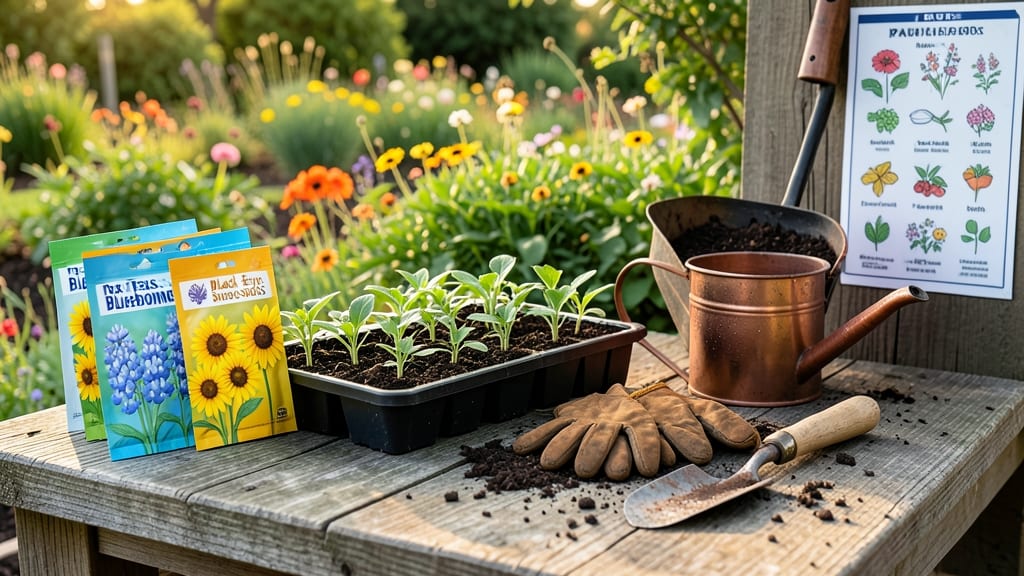
Planting gardens in Texas requires timing based on your region and crop type: warm-season vegetables like tomatoes and peppers should go in after the last frost (typically late February to early April in most areas), while cool-season crops such as lettuce and broccoli thrive when planted in fall (September to November). Always verify your local frost dates for accuracy.
Texas's diverse climate means planting windows shift dramatically from the Panhandle to the Gulf Coast. 🌱 In North Texas, where frosts linger until mid-April, gardeners often wait until May for heat-loving plants, while South Texas gardeners can start warm-season crops as early as February.
The key is matching your planting schedule to your USDA hardiness zone—for example, Zone 7b in Dallas vs. Zone 9a in Houston.
I always check the Texas A&M AgriLife Planting Calendar for my county's specific frost-free date, as even a few degrees can make the difference between success and failure.
For a year-round harvest, Texas gardeners use succession planting—planting fast-growing crops like radishes every 2-3 weeks to keep the garden productive.
In the Hill Country, where nights stay cooler, you might extend your cool-season window by planting lettuce in October, while Gulf Coast gardeners can grow tomatoes year-round with proper irrigation. The Texas High Plains presents unique challenges with shorter growing seasons, so early varieties and cold frames become essential tools.
💡 In This Article
- Texas Frost Zones and Planting Timelines by Region
- Best Planting Schedule for Texas Vegetables and Flowers
Texas frost zones and planting timelines by region
Texas's frost-free dates vary dramatically due to its massive north-south span—over 800 miles—creating microclimates where a single county can experience 10-14°F temperature swings. The North Texas Panhandle (Zone 7a-7b) often sees last frosts in mid-April, while South Texas (Zone 9a-10a) rarely drops below freezing after January.
This is why USDA hardiness zones are your first reference point: Zone 7b in Dallas means warm-season crops like okra should wait until May 1, while Zone 9a in Corpus Christi allows planting tomatoes as early as February 15.
The Hill Country presents unique challenges with its elevated terrain, where frost pockets can occur even in Zone 8a areas like Austin. I've seen 28°F lows in March here, so I always verify my county's 30-year frost average via the Texas A&M AgriLife Extension maps.
Their interactive tool lets you pinpoint your exact last frost date—critical for heat-sensitive crops like basil, which wilts at 32°F. Even a 2-week difference in planting can mean the difference between a thriving garden and a failed crop.
For Gulf Coast gardeners, the real challenge isn't frost but humidity and heat stress. In Zone 10a areas like Brownsville, you can plant warm-season crops year-round, but 90°F+ daytime temps require afternoon shade for delicate greens.
Meanwhile, West Texas (Zone 8a) deals with dry winds that accelerate soil moisture loss, demanding mulching and drip irrigation to maintain planting windows. The key is adjusting your schedule to these regional quirks—what works in Houston fails in Lubbock.
Here's how to find your precise planting window: Step 1 - Identify your USDA zone (Texas A&M's zone finder is free). Step 2 - Check your county's average last frost date (AgriLife's planting calendar). Step 3 - Adjust for microclimates: North-facing slopes warm faster than valleys, and urban areas stay 5-10°F warmer than rural zones.
For example, San Antonio (Zone 8b) might see its last frost 2 weeks earlier than nearby Bandera due to elevation differences.
What most gardeners overlook is soil temperature, which must reach 60°F for warm-season seeds to germinate. In East Texas (Zone 8a), this happens by March 15, but in North Texas, you might need to wait until April 15.
Use a soil thermometer—planting too early in cold soil leads to rotten seeds or stunted seedlings. I've wasted $50 on tomato seeds planted in 50°F soil—they simply refused to sprout until the temperature rose.
Pro tip: Bookmark the Texas A&M AgriLife Planting Calendar and set reminders for 3 key dates—your last frost, first frost, and average 90°F+ onset. These dates determine whether you'll grow one harvest (Panhandle) or three seasons (South Texas).
For instance, Zone 9a gardeners can plant broccoli in October, tomatoes in February, and green beans in June—a year-round possibility most Texans never consider.