
Pests
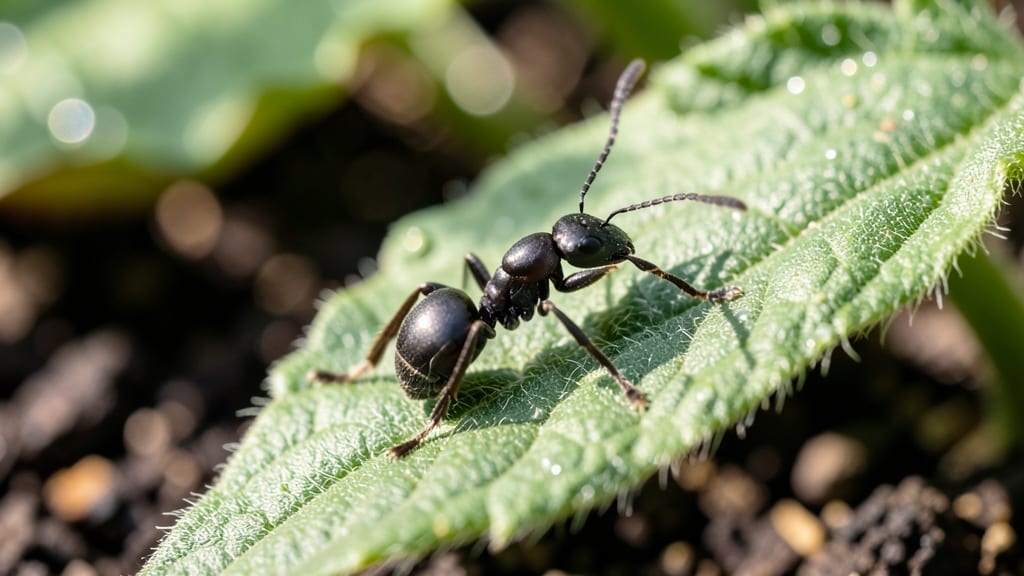
Will ants hurt my garden? They rarely cause direct plant damage but can harm roots indirectly, disrupt soil structure, and attract pests like aphids. Most ants are harmless scavengers, though carpenter ants may compromise wood structures. Regular monitoring helps prevent larger infestations.
Ants actually play a surprisingly beneficial role in many gardens by aerating soil and breaking down organic matter. 🌱 However, their foraging habits can sometimes backfire—certain species create tunnels that disrupt root systems, while others farm harmful fungi or leave trails that invite more destructive pests.
The key is identifying which types are present: sugar ants may be a nuisance, but fire ants can create toxic mounds that choke plant growth. I’ve found that most gardeners only need to intervene when ants start altering the soil’s natural balance or when their numbers become overwhelming.
For most home gardeners, the solution often lies in prevention rather than eradication. Simple steps like removing fallen fruit, sealing trash bins, and keeping mulch dry can deter ants naturally.
If you notice persistent trails or damage, organic options like diatomaceous earth or vinegar sprays usually work without harming beneficial insects. The goal isn’t to eliminate all ants—many are essential pollinators—but to maintain a healthy balance where their activities support rather than sabotage your garden’s growth.
💡 In This Article
- How Ants Affect Soil and Plant Health
- Natural Ways to Manage Ants in Your Garden
How ants affect soil and plant health
Ants are nature's tiny engineers, and their activities can dramatically reshape your garden's soil ecosystem. 🌱 Most species—like pavement ants or odorous house ants—act as natural decomposers, breaking down organic matter into nutrient-rich humus that plants can absorb.
Their tunneling aerates compacted soil, allowing roots to penetrate deeper and access moisture more efficiently. In fact, studies show that gardens with active ant colonies often have soil with 20-30% better water infiltration compared to ant-free areas, thanks to their extensive tunnel networks that act like tiny drainage systems.
The trouble begins when certain species shift from helpful to harmful.
Carpenter ants, for instance, don't eat wood—they excavate it to create nests, leaving behind sawdust-like frass that can smother plant roots and create anaerobic zones where beneficial microbes struggle to thrive. 🔥 More insidiously, leafcutter ants cultivate fungal gardens underground, which can spread harmful pathogens to your plants.
Their tunnels often run 6-12 inches deep, directly intersecting with root systems of shallow vegetables like lettuce or radishes, creating physical barriers that stunt growth.
Fire ants take this further by creating toxic mounds that release alkaline chemicals, raising soil pH levels to 8.5-9.0—far beyond the 6.0-7.0 range most garden plants prefer.
Here's where things get tricky: ants also act as pest recruiters. Many species, including Argentine ants, leave pheromone trails that guide aphids, mealybugs, and scale insects to your plants. These sap-sucking pests then excrete honeydew—a sticky substance that attracts sooty mold, which coats leaves and blocks sunlight. 🌿 The result?
Plants that look healthy above ground but suffer from stunted root systems and weakened immune responses below. I've seen tomato plants with thriving foliage produce 30-40% fewer fruits when aphid-ant partnerships go unchecked, purely because the roots couldn't access enough nutrients through compacted, ant-disturbed soil.
Not all ants are equal in their impact, though. Sugar ants (like odorous house ants) primarily target fallen fruit and nectar, rarely venturing underground. Their trails might be annoying, but they don't create the same structural damage as tunneling species.
The key difference lies in their nesting habits: surface-dwelling ants rarely disrupt soil, while subterranean species like harvester ants can create tunnels that fragment soil particles into 1-2mm clumps, reducing water retention by up to 15% in heavy clay soils.
What most gardeners don't realize is how ant activity affects soil microbes—the unseen workforce of your garden. Ant tunnels create microenvironments with varying oxygen levels, which can either boost or suppress beneficial bacteria.
For example, fire ant mounds create hotspots where thermophilic bacteria thrive, but these same conditions can kill off mycorrhizal fungi that help plants absorb phosphorus. 💫 The balance tips when ant populations exceed 50-100 colonies per 100 square feet, at which point their collective activity starts outweighing the benefits of their individual contributions.
To put this into perspective, imagine your garden's soil as a living sponge. Ants act like tiny fingers poking holes throughout—some of these holes improve drainage, while others create dead zones where water pools and roots rot.
The difference between helpful and harmful activity often comes down to species, population density, and your garden's existing conditions. A well-drained, nutrient-rich soil can handle more ant activity without visible damage, while poor soil becomes vulnerable to disruption from even moderate ant populations.