
Container Gardens
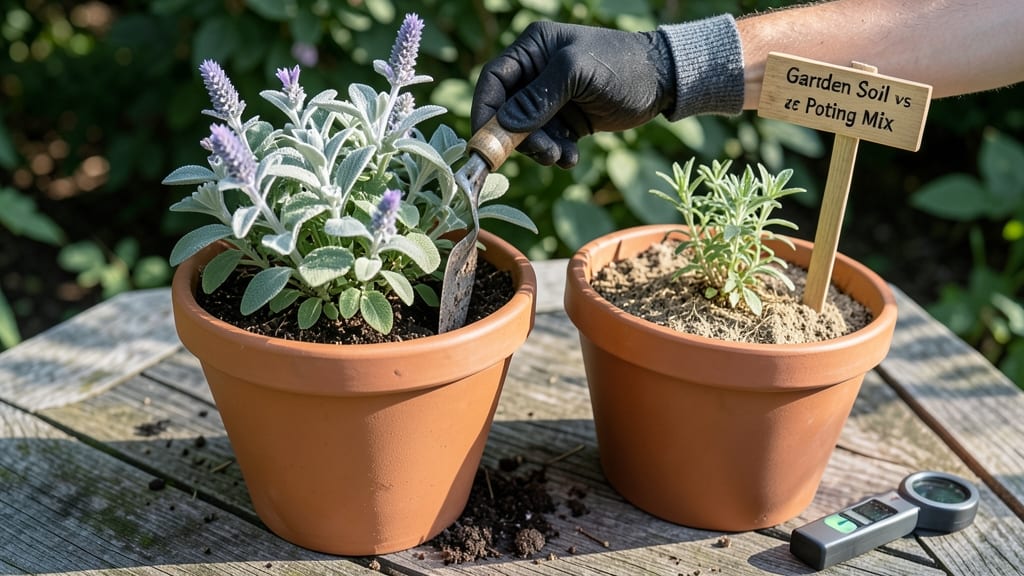
Garden soil can be used in pots when properly amended to prevent compaction and improve drainage. Mix it with perlite, sand, or compost in equal parts, but avoid heavy clay soil for best results.
Using garden soil directly in pots often leads to problems like poor drainage and root suffocation. 🌱 The dense structure of garden soil compacts easily, blocking oxygen flow to roots and trapping excess moisture—both of which can cause rot.
For container gardening, I recommend blending garden soil with organic matter like compost or inorganic amendments such as perlite to create a lighter, more breathable medium. This adjustment mimics the airy texture of commercial potting mixes while keeping costs low.
Another key consideration is sterilization. Garden soil may contain weed seeds, pathogens, or pests that can harm potted plants. To prepare it safely, bake the soil in an oven at 200°F for 30 minutes or let it sit in the sun for a week to kill unwanted organisms.
Once amended and sterilized, this DIY potting mix works well for herbs, leafy greens, and shallow-rooted plants—but always choose containers with drainage holes to prevent waterlogging.
💡 In This Article
- Why Garden Soil Needs Modification for Potted Plants
- Best Ways to Repurpose Garden Soil for Containers
Why garden soil needs modification for potted plants
Garden soil is designed for in-ground planting where roots can spread freely, but pots create a confined environment that changes everything. The primary issue is compaction: when you water potted plants, the soil settles tightly around the roots, squeezing out the air pockets they need to breathe.
This lack of aeration forces roots to struggle for oxygen, leading to stunted growth or even suffocation. In contrast, commercial potting mixes contain ingredients like peat moss or coconut coir that stay fluffy, maintaining a 20-30% air-to-soil ratio—critical for root health.
Another problem is nutrient leaching. Pots drain quickly, flushing out essential minerals like nitrogen and phosphorus that garden soil retains naturally through its larger volume. Without amendments, plants in pots deplete nutrients faster, often showing signs like yellowing leaves within 4-6 weeks.
The solution? Adding organic matter like compost (which holds 3-5 times its weight in water and nutrients) or perlite (which adds 40-50% more pore space) mimics the nutrient-retaining capacity of garden soil while preventing compaction.
Moisture management is where garden soil fails most dramatically. Heavy clay soil, common in many gardens, holds water like a sponge—ideal for in-ground plants but disastrous in pots. Without drainage holes, roots sit in soggy conditions, leading to root rot within 3-5 days in humid climates.
Even well-draining garden soil lacks the structural support of potting mixes, which often include vermiculite or bark fines to create a loose, crumbly texture that sheds excess water while retaining moisture for roots.
Consider the sensory difference: garden soil feels dense and cool when damp, while a well-amended potting mix stays light and warm to the touch. This texture change isn't just about feel—it's about microbiological activity.
Potted plants rely on beneficial microbes in the soil to break down organic matter, but compacted soil starves these organisms. Adding 10-20% worm castings to your garden soil mix introduces these microbes while improving water retention—just don't skip the drainage holes!
For visual learners, imagine roots in garden soil as a tangled web trying to wiggle through concrete, while roots in amended potting mix move freely through a network of air channels.
This structural difference explains why the same plant thrives in-ground but wilts in a pot filled with unmodified garden soil. The key is creating a balanced medium that combines the nutrient richness of garden soil with the aeration and drainage of potting mixes.
One common mistake is assuming all garden soil is the same. Sandy soil drains too quickly, while clay holds too much water—both extremes need opposite amendments.
For sandy soil, add 2 parts peat moss to 1 part sand; for clay, mix in 3 parts perlite to 1 part soil. Test your garden soil's texture by squeezing a handful: if it forms a tight ball that doesn't crumble easily, it's too dense for pots.
Remember: the goal isn't to replicate garden soil in pots, but to create an environment where roots can access both water and air simultaneously. This balance is what separates thriving container gardens from sad, wilted plants. 🌱